
News on industries and services in Taiwan
Provided by AGP
Carbon Fiber Manufacturing Plant Setup, Feasibility Study, ROI Analysis and Business Plan Consultant
Carbon Fiber Manufacturing Plant Cost
A Detailed DPR Covering CapEx, OpEx, PAN Precursor Processing, ROI and the Global Opportunity in Aerospace, Automotive and Industrial Carbon Fiber Manufacturing
BROOKLYN, NY, UNITED STATES, May 19, 2026 /EINPresswire.com/ -- Setting up a carbon fiber manufacturing plant is one of the highest-margin manufacturing investments available in the advanced materials sector today. Carbon fiber delivers a strength-to-weight ratio that no competing material matches at scale - which is why aerospace, wind energy, and automotive manufacturers are all increasing their consumption simultaneously. High barriers to entry created by capital intensity, long qualification cycles, and technical process complexity mean that producers who successfully establish certified capacity enjoy pricing power and customer relationships that are structurally difficult to displace.IMARC Group’s Carbon Fiber Manufacturing Plant Project Report is a complete DPR and carbon fiber manufacturing feasibility study for investors, chemical manufacturers, and project developers entering this space. It covers the full PAN-based carbon fiber manufacturing plant setup - from precursor preparation through oxidation, carbonization, surface treatment, and sizing - with complete carbon fiber plant CapEx and OpEx modelling and 10-year financial projections.
𝐑𝐞𝐪𝐮𝐞𝐬𝐭 𝐟𝐨𝐫 𝐚 𝐒𝐚𝐦𝐩𝐥𝐞 𝐑𝐞𝐩𝐨𝐫𝐭: https://www.imarcgroup.com/carbon-fiber-manufacturing-plant-project-report/requestsample
𝗜𝗻𝘃𝗲𝘀𝘁𝗺𝗲𝗻𝘁 𝗗𝗿𝗶𝘃𝗲𝗿𝘀 𝗮𝗻𝗱 𝗠𝗮𝗿𝗸𝗲𝘁 𝗢𝗽𝗽𝗼𝗿𝘁𝘂𝗻𝗶𝘁𝘆
Three megatrends are simultaneously driving carbon fiber demand across different end-use industries:
𝗔𝗲𝗿𝗼𝘀𝗽𝗮𝗰𝗲 𝗹𝗶𝗴𝗵𝘁𝘄𝗲𝗶𝗴𝗵𝘁𝗶𝗻𝗴 𝗯𝗲𝗰𝗼𝗺𝗶𝗻𝗴 𝘀𝘁𝗿𝘂𝗰𝘁𝘂𝗿𝗮𝗹, 𝗻𝗼𝘁 𝗼𝗽𝘁𝗶𝗼𝗻𝗮𝗹: Modern commercial aircraft use carbon fiber composites for 50% or more of their structural weight. Carbon fiber reduces component weight by up to 40–60% versus metals, directly translating into fuel savings and range extension. Toray Industries and Hexcel Corporation both expanded production capacity in late 2025 to meet long-term aerospace OEM supply agreements - demand here is contracted, not speculative.
𝗢𝗳𝗳𝘀𝗵𝗼𝗿𝗲 𝘄𝗶𝗻𝗱 𝗿𝗲𝗾𝘂𝗶𝗿𝗶𝗻𝗴 𝗹𝗼𝗻𝗴𝗲𝗿 𝗯𝗹𝗮𝗱𝗲𝘀 𝘁𝗵𝗮𝗻 𝗳𝗶𝗯𝗲𝗿𝗴𝗹𝗮𝘀𝘀 𝗰𝗮𝗻 𝗱𝗲𝗹𝗶𝘃𝗲𝗿: At blade lengths above 80 metres, fiberglass becomes too heavy - carbon fiber is the only viable material. It reduces blade weight by approximately 30%, enabling longer, stiffer, and more efficient blades. Mitsubishi Chemical Holdings secured a USD 200 million wind turbine supply contract in Q3 2025, signalling the long-term offtake volumes available in this segment.
𝗘𝗩 𝗮𝗻𝗱 𝗵𝘆𝗱𝗿𝗼𝗴𝗲𝗻 𝘀𝘁𝗼𝗿𝗮𝗴𝗲 𝗰𝗿𝗲𝗮𝘁𝗶𝗻𝗴 𝗲𝗻𝘁𝗶𝗿𝗲𝗹𝘆 𝗻𝗲𝘄 𝗱𝗲𝗺𝗮𝗻𝗱 𝗽𝗼𝗼𝗹𝘀: EVs benefit from structural lightweighting that improves range per charge, while Type IV hydrogen storage tanks require carbon fiber composite pressure vessels. Unlike aerospace, which is cyclical, EV and hydrogen demand grows steadily with fleet electrification, backed by national hydrogen strategies across the EU, Japan, South Korea, and India.
𝗖𝗮𝗿𝗯𝗼𝗻 𝗙𝗶𝗯𝗲𝗿 𝗧𝘆𝗽𝗲𝘀 𝗮𝗻𝗱 𝗣𝗿𝗼𝗱𝘂𝗰𝘁 𝗥𝗮𝗻𝗴𝗲
A carbon fiber manufacturing plant’s product grade mix determines its end markets, process parameters, and margin profile:
• 𝗦𝘁𝗮𝗻𝗱𝗮𝗿𝗱 𝗺𝗼𝗱𝘂𝗹𝘂𝘀 (𝗦𝗠) 𝗰𝗮𝗿𝗯𝗼𝗻 𝗳𝗶𝗯𝗲𝗿: Tensile modulus of 33–35 MSI. Used in wind turbine blades, automotive structures, and civil infrastructure. Highest volume, most competitive pricing.
• 𝗜𝗻𝘁𝗲𝗿𝗺𝗲𝗱𝗶𝗮𝘁𝗲 𝗺𝗼𝗱𝘂𝗹𝘂𝘀 (𝗜𝗠) 𝗰𝗮𝗿𝗯𝗼𝗻 𝗳𝗶𝗯𝗲𝗿: Tensile modulus of 40–50 MSI. The primary aerospace structural grade used in aircraft fuselages, wings, and empennage. Aerospace carbon fiber manufacturing is predominantly IM grade, commanding a significant premium over SM.
• 𝗛𝗶𝗴𝗵 𝗺𝗼𝗱𝘂𝗹𝘂𝘀 (𝗛𝗠) 𝗮𝗻𝗱 𝘂𝗹𝘁𝗿𝗮-𝗵𝗶𝗴𝗵 𝗺𝗼𝗱𝘂𝗹𝘂𝘀 𝗰𝗮𝗿𝗯𝗼𝗻 𝗳𝗶𝗯𝗲𝗿: Tensile modulus above 55 MSI. Used in satellites, space launch structures, and high-precision aerospace components where stiffness is the primary requirement. Low volume but premium pricing. Requires graphitization at temperatures up to 3,000°C.
• 𝗟𝗮𝗿𝗴𝗲 𝘁𝗼𝘄 𝗰𝗮𝗿𝗯𝗼𝗻 𝗳𝗶𝗯𝗲𝗿 (>𝟮𝟰𝗞 𝗳𝗶𝗹𝗮𝗺𝗲𝗻𝘁𝘀): Lower cost per kilogram due to higher throughput. Used in wind energy, automotive, and pressure vessels where cost is the primary criterion. Fastest-growing volume segment.
• 𝗣𝗔𝗡-𝗯𝗮𝘀𝗲𝗱 𝘃𝗲𝗿𝘀𝘂𝘀 𝗽𝗶𝘁𝗰𝗵-𝗯𝗮𝘀𝗲𝗱 𝗰𝗮𝗿𝗯𝗼𝗻 𝗳𝗶𝗯𝗲𝗿: PAN-based dominates with the largest market share, offering higher tensile strength and broad application versatility. A PAN-based carbon fiber manufacturing plant covers the majority of commercial demand. Pitch-based is used in specialist thermal and space applications.
𝗖𝗮𝗿𝗯𝗼𝗻 𝗙𝗶𝗯𝗲𝗿 𝗠𝗮𝗻𝘂𝗳𝗮𝗰𝘁𝘂𝗿𝗶𝗻𝗴 𝗣𝗹𝗮𝗻𝘁 𝗙𝗲𝗮𝘀𝗶𝗯𝗶𝗹𝗶𝘁𝘆 𝗥𝗲𝗽𝗼𝗿𝘁: https://www.imarcgroup.com/carbon-fiber-manufacturing-plant-project-report
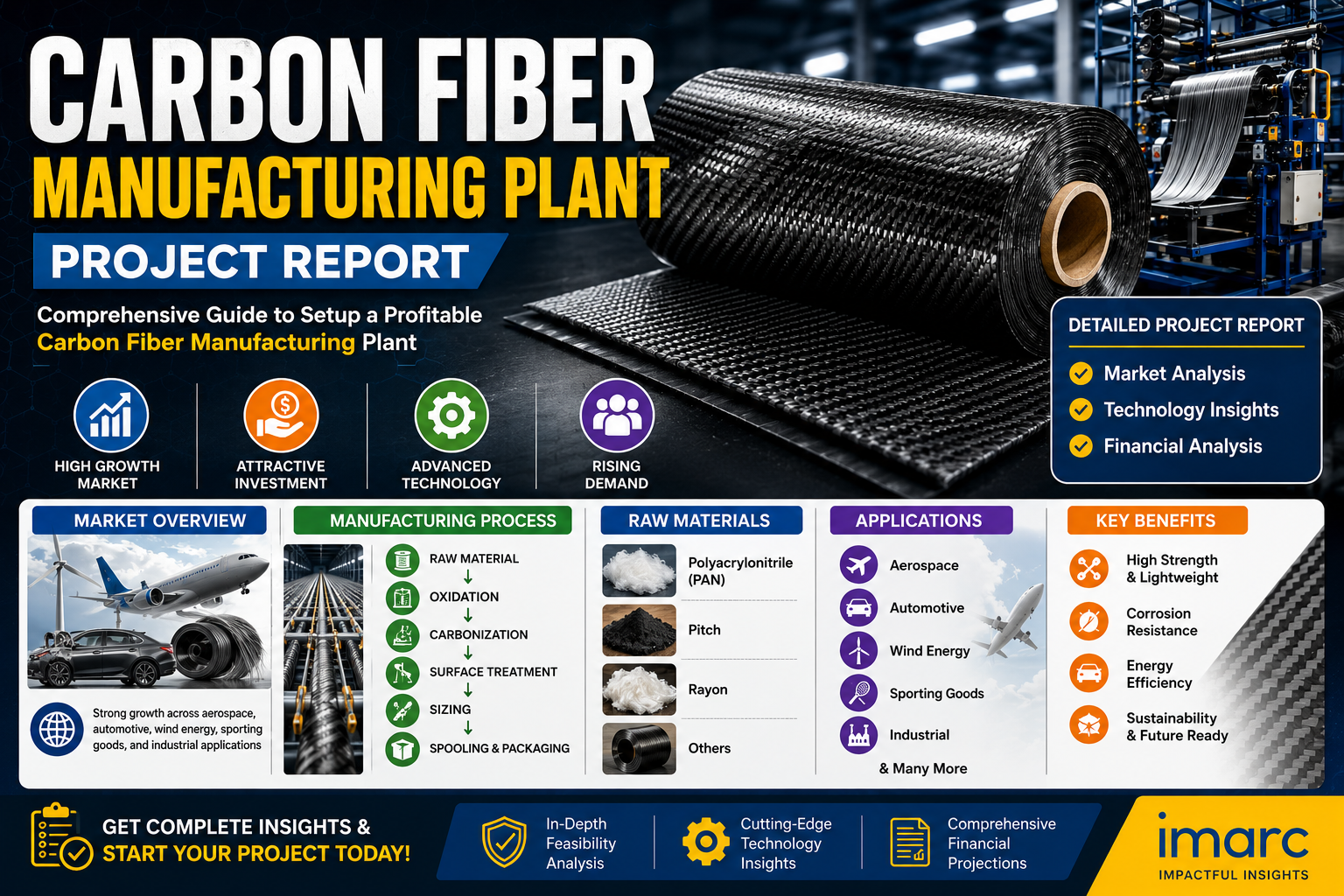
𝗛𝗼𝘄 𝗮 𝗖𝗮𝗿𝗯𝗼𝗻 𝗙𝗶𝗯𝗲𝗿 𝗠𝗮𝗻𝘂𝗳𝗮𝗰𝘁𝘂𝗿𝗶𝗻𝗴 𝗣𝗹𝗮𝗻𝘁 𝗪𝗼𝗿𝗸𝘀 - 𝗧𝗵𝗲 𝗢𝘅𝗶𝗱𝗮𝘁𝗶𝗼𝗻 𝗮𝗻𝗱 𝗖𝗮𝗿𝗯𝗼𝗻𝗶𝘇𝗮𝘁𝗶𝗼𝗻 𝗣𝗿𝗼𝗰𝗲𝘀𝘀
Carbon fiber production is a thermally intensive, multi-stage process. Each stage requires precise temperature control - deviations affect fiber properties and yield:
• 𝗣𝗔𝗡 𝗽𝗿𝗲𝗰𝘂𝗿𝘀𝗼𝗿 𝗽𝗿𝗼𝗱𝘂𝗰𝘁𝗶𝗼𝗻: Polyacrylonitrile is polymerised and wet or dry-jet wet spun into precursor fibre tows. Precursor quality - molecular weight distribution, fibre diameter, and defect density - directly determines the final carbon fibre properties. PAN precursor accounts for 50–60% of total production cost
• 𝗦𝘁𝗮𝗯𝗶𝗹𝗶𝘀𝗮𝘁𝗶𝗼𝗻 (𝗼𝘅𝗶𝗱𝗮𝘁𝗶𝗼𝗻): Precursor tows are drawn through oxidation ovens at 200–300°C in air for several hours under controlled tension. This converts the linear PAN chains into a thermally stable ladder polymer structure. Stabilisation is the most time-consuming step and the primary production bottleneck
• 𝗟𝗼𝘄-𝘁𝗲𝗺𝗽𝗲𝗿𝗮𝘁𝘂𝗿𝗲 𝗰𝗮𝗿𝗯𝗼𝗻𝗶𝘀𝗮𝘁𝗶𝗼𝗻: Stabilised fibres enter a carbonisation furnace at 1,000–1,500°C in an inert nitrogen atmosphere. Non-carbon elements (hydrogen, oxygen, nitrogen) are driven off, leaving a carbon-rich structure. This step consumes the most energy in the process and is the primary driver of the 30–40% utility cost share
• 𝗛𝗶𝗴𝗵-𝘁𝗲𝗺𝗽𝗲𝗿𝗮𝘁𝘂𝗿𝗲 𝗰𝗮𝗿𝗯𝗼𝗻𝗶𝘀𝗮𝘁𝗶𝗼𝗻 𝗼𝗿 𝗴𝗿𝗮𝗽𝗵𝗶𝘁𝗶𝘀𝗮𝘁𝗶𝗼𝗻: For high modulus grades, a second furnace stage at up to 3,000°C increases graphitic order, improving stiffness. Standard and intermediate modulus grades typically stop after low-temperature carbonisation
• 𝗦𝘂𝗿𝗳𝗮𝗰𝗲 𝘁𝗿𝗲𝗮𝘁𝗺𝗲𝗻𝘁: Fibres pass through an electrochemical oxidation bath to create surface functional groups. This improves adhesion between the carbon fibre and the resin matrix in composite parts - critical for the structural performance of the finished composite
• 𝗦𝗶𝘇𝗶𝗻𝗴 𝗮𝗽𝗽𝗹𝗶𝗰𝗮𝘁𝗶𝗼𝗻: A thin polymer sizing coat is applied to protect fibres during handling, weaving, and composite processing. Sizing chemistry is matched to the intended resin system (epoxy, thermoplastic, etc.)
• 𝗪𝗶𝗻𝗱𝗶𝗻𝗴 𝗮𝗻𝗱 𝘀𝗽𝗼𝗼𝗹𝗶𝗻𝗴: Finished fibre tows are wound onto bobbins or spools at specified tension. Package weight and winding pattern are specified by downstream customers
• 𝗤𝘂𝗮𝗹𝗶𝘁𝘆 𝘁𝗲𝘀𝘁𝗶𝗻𝗴 𝗮𝗻𝗱 𝗱𝗶𝘀𝗽𝗮𝘁𝗰𝗵: Tensile strength, modulus, elongation, density, and surface chemistry are tested on each production batch. Carbon fibre composites manufacturing plant customers require full traceability and certificate of conformity for aerospace and defence orders
𝗣𝗹𝗮𝗻𝘁 𝗜𝗻𝘃𝗲𝘀𝘁𝗺𝗲𝗻𝘁 𝗘𝗰𝗼𝗻𝗼𝗺𝗶𝗰𝘀
𝗣𝗿𝗼𝗱𝘂𝗰𝘁𝗶𝗼𝗻 𝗖𝗮𝗽𝗮𝗰𝗶𝘁𝘆:
• The proposed manufacturing facility is designed with an annual production capacity ranging between 1,000 – 5,000 MT, enabling economies of scale while maintaining operational flexibility
𝗣𝗿𝗼𝗳𝗶𝘁𝗮𝗯𝗶𝗹𝗶𝘁𝘆 𝗕𝗲𝗻𝗰𝗵𝗺𝗮𝗿𝗸𝘀:
• Gross Profit: 40–50%
• Net Profit: 20–30% after financing costs, depreciation, and taxes
𝗢𝗽𝗲𝗿𝗮𝘁𝗶𝗻𝗴 𝗖𝗼𝘀𝘁 (𝗢𝗽𝗘𝘅) 𝗕𝗿𝗲𝗮𝗸𝗱𝗼𝘄𝗻:
• Raw Materials (PAN precursor): 50–60% of total OpEx
• Utilities: 30–40% of OpEx - the carbon fiber plant OpEx is uniquely utility-intensive, with carbonisation furnaces operating at up to 1,500°C in inert atmosphere making this one of the most energy-intensive advanced materials processes
𝗖𝗮𝗿𝗯𝗼𝗻 𝗙𝗶𝗯𝗲𝗿 𝗣𝗹𝗮𝗻𝘁 𝗖𝗮𝗽𝗘𝘅 𝗖𝗼𝗺𝗽𝗼𝗻𝗲𝗻𝘁𝘀:
• Land and factory construction including high-temperature furnace halls, oxidation oven bays, and controlled atmosphere areas
• Core process equipment: PAN precursor spinning lines (or precursor procurement), oxidation ovens, low-temperature and high-temperature carbonisation furnaces, graphitisation units for HM grades
• Surface treatment and sizing lines, spooling and winding systems
• Inert gas supply systems, exhaust treatment and emission control (HCN and other off-gases from carbonisation require treatment)
• Quality testing laboratory: tensile testing machines, surface analysis equipment, traceability systems
• Pre-operative costs, process qualification, aerospace customer audit preparation, and initial working capital
𝗚𝗹𝗼𝗯𝗮𝗹 𝗠𝗮𝗿𝗸𝗲𝘁 𝗮𝗻𝗱 𝗥𝗲𝗴𝗶𝗼𝗻𝗮𝗹 𝗗𝗲𝗺𝗮𝗻𝗱
The global carbon fiber market, valued at USD 245.17 million in 2025, is projected to reach USD 480.43 million by 2034 at a CAGR of 7.8%. Aerospace and defence remain the highest-value consuming segment, while wind energy and automotive are the fastest-growing volume markets.
𝗜𝗻𝗱𝗶𝗮: India represents 5.6% of total global carbon fibre demand in 2025 and is growing at approximately 2.2 times the global average rate. Reliance Industries is building a 4,000 MT carbon fibre plant, marking India’s most significant entry into domestic production. Aerospace, defence (DRDO), and wind energy are the primary demand segments. For new manufacturers, India’s combination of growing domestic demand, government defence procurement preferences, and PLI-linked materials manufacturing incentives makes it one of the most attractive locations for a new carbon fiber production plant.
𝗝𝗮𝗽𝗮𝗻: Home to Toray Industries, the global market leader, and Teijin Limited, two companies that collectively hold a dominant share of global carbon fibre production capacity. Japan’s aerospace supply chain and automotive technology partnerships make it the most technically advanced carbon fibre producing nation. In Q2 2025, Teijin opened a new carbon fibre manufacturing plant in Vietnam to expand Asian capacity.
𝗨𝗻𝗶𝘁𝗲𝗱 𝗦𝘁𝗮𝘁𝗲𝘀: Hexcel Corporation and specialty producers serve Boeing, Lockheed Martin, and Northrop Grumman through long-term supply agreements. The DoE has funded research programmes on recyclable carbon fibre and cost-reduction through automation. Hexcel acquired Carbonix in Q2 2025 to expand its aerospace and defence composite capabilities.
𝗘𝘂𝗿𝗼𝗽𝗲: SGL Carbon (Germany) and Solvay (Belgium) serve the Airbus supply chain, automotive OEMs, and wind energy blade manufacturers. SGL Carbon announced a significant investment in a new production facility in August 2025. Germany is the hub for automotive carbon fibre application development, with Mercedes, BMW, and Audi all integrating carbon composites into premium and performance vehicles.
𝗖𝗵𝗶𝗻𝗮: Chinese suppliers now account for nearly 50% of global reported carbon fibre capacity, with Toray Advanced Materials, Zhongfu Shenying, and Jiangsu Hengshen as major producers. China’s wind power expansion and EV production volumes make it the largest single-country consumer of carbon fibre, with domestic production primarily serving domestic demand.
𝗦𝗶𝘁𝗲 𝗦𝗲𝗹𝗲𝗰𝘁𝗶𝗼𝗻 𝗮𝗻𝗱 𝗣𝗼𝗹𝗶𝗰𝘆 𝗦𝘂𝗽𝗽𝗼𝗿𝘁
Carbon fiber plant setup cost and operational efficiency are heavily influenced by location decisions:
• 𝗜𝗻𝗲𝗿𝘁 𝗴𝗮𝘀 𝘀𝘂𝗽𝗽𝗹𝘆: Carbonisation furnaces require continuous nitrogen supply in large volumes. Proximity to an industrial gas supplier or the ability to install an on-site nitrogen generation plant is a baseline requirement for any carbon fiber composites manufacturing plant
• 𝗣𝗼𝘄𝗲𝗿 𝘀𝘂𝗽𝗽𝗹𝘆 𝗾𝘂𝗮𝗹𝗶𝘁𝘆 𝗮𝗻𝗱 𝗰𝗼𝘀𝘁: High-temperature furnaces operating continuously at 1,000–1,500°C consume substantial electricity. Industrial parks with reliable grid supply and preferential industrial power tariffs directly improve the carbon fiber plant ROI
• 𝗘𝗻𝘃𝗶𝗿𝗼𝗻𝗺𝗲𝗻𝘁𝗮𝗹 𝗰𝗼𝗺𝗽𝗹𝗶𝗮𝗻𝗰𝗲: Carbonisation off-gases including hydrogen cyanide (HCN) require treatment before discharge. Proximity to an industrial zone with permitted emission treatment infrastructure and access to regulatory expertise reduces compliance risk and capital cost
• 𝗔𝗲𝗿𝗼𝘀𝗽𝗮𝗰𝗲 𝗰𝘂𝘀𝘁𝗼𝗺𝗲𝗿 𝗾𝘂𝗮𝗹𝗶𝗳𝗶𝗰𝗮𝘁𝗶𝗼𝗻: Aerospace-grade carbon fibre requires formal qualification with Boeing, Airbus, or Tier-1 primes before volume supply can begin. Site selection should consider proximity to technical centres and test facilities that support the qualification process
• 𝗚𝗼𝘃𝗲𝗿𝗻𝗺𝗲𝗻𝘁 𝗶𝗻𝗰𝗲𝗻𝘁𝗶𝘃𝗲𝘀: India - Defence Production and Export Promotion Policy, PLI for advanced chemistry and materials, DRDO co-development programmes. US - DoE funding for carbon fibre cost-reduction R&D, DoD preferred supplier status for aerospace composites. EU - Horizon Europe grants for sustainable carbon fibre. Japan and South Korea - national advanced materials programmes with R&D co-investment
𝗥𝗲𝗽𝗼𝗿𝘁 𝗖𝗼𝘃𝗲𝗿𝗮𝗴𝗲
IMARC Group’s Carbon Fiber Plant Project Report is a complete carbon fiber manufacturing business plan and technical reference for investment decisions, bank financing, and pre-project engineering:
• Full process flow with mass balance covering all stages from PAN precursor through stabilisation, carbonisation, surface treatment, sizing, winding, and dispatch
• Carbon fiber plant CapEx breakdown: spinning lines, oxidation ovens, carbonisation furnaces, surface treatment and sizing lines, quality testing systems
• 10-year OpEx projections: PAN precursor procurement, nitrogen and utility costs, labour, maintenance
• Financial model: carbon fiber plant ROI, IRR, NPV, DSCR, break-even, and sensitivity tables across precursor price and capacity utilisation scenarios
• Machinery specifications with sourcing options across Japanese, European, and Taiwanese equipment suppliers
• Product mix strategy: standard modulus versus intermediate modulus versus large tow - margin, qualification timeline, and market access comparison
• Carbon fiber production plant setup cost benchmarking across different capacity configurations and integration levels
• Regulatory compliance and customer qualification framework for aerospace, defence, and industrial carbon fiber plant operations across all major geographies
The report is built for advanced materials investors evaluating a carbon fiber plant investment, chemical companies exploring upstream integration into carbon fibre, defence and aerospace suppliers seeking self-sufficiency, and banks requiring a bankable carbon fiber manufacturing feasibility study for project financing.
𝐁𝐫𝐨𝐰𝐬𝐞 𝐌𝐨𝐫𝐞 𝐅𝐞𝐚𝐬𝐢𝐛𝐢𝐥𝐢𝐭𝐲 𝐒𝐭𝐮𝐝𝐲 𝐚𝐧𝐝 𝐁𝐮𝐬𝐢𝐧𝐞𝐬𝐬 𝐏𝐥𝐚𝐧 𝐑𝐞𝐩𝐨𝐫𝐭𝐬 𝐛𝐲 𝐈𝐌𝐀𝐑𝐂 𝐆𝐫𝐨𝐮𝐩:
• 𝗣𝗮𝘀𝘁𝗮 𝗠𝗮𝗻𝘂𝗳𝗮𝗰𝘁𝘂𝗿𝗶𝗻𝗴 𝗣𝗹𝗮𝗻𝘁 𝗣𝗿𝗼𝗷𝗲𝗰𝘁 𝗥𝗲𝗽𝗼𝗿𝘁: https://www.imarcgroup.com/pasta-manufacturing-plant-project-report
• 𝗣𝗼𝘂𝗹𝘁𝗿𝘆 𝗙𝗲𝗲𝗱 𝗠𝗮𝗻𝘂𝗳𝗮𝗰𝘁𝘂𝗿𝗶𝗻𝗴 𝗣𝗹𝗮𝗻𝘁 𝗣𝗿𝗼𝗷𝗲𝗰𝘁 𝗥𝗲𝗽𝗼𝗿𝘁: https://www.imarcgroup.com/poultry-feed-manufacturing-plant-project-report
• 𝗣𝗿𝗲𝗰𝗮𝘀𝘁 𝗖𝗼𝗻𝗰𝗿𝗲𝘁𝗲 𝗠𝗮𝗻𝘂𝗳𝗮𝗰𝘁𝘂𝗿𝗶𝗻𝗴 𝗣𝗹𝗮𝗻𝘁 𝗣𝗿𝗼𝗷𝗲𝗰𝘁 𝗥𝗲𝗽𝗼𝗿𝘁: https://www.imarcgroup.com/precast-concrete-manufacturing-plant-project-report
• 𝗟𝗶𝘁𝗵𝗶𝘂𝗺 𝗜𝗿𝗼𝗻 𝗣𝗵𝗼𝘀𝗽𝗵𝗮𝘁𝗲 (𝗟𝗶𝗳𝗲𝗽𝗼𝟰) 𝗕𝗮𝘁𝘁𝗲𝗿𝘆 𝗠𝗮𝗻𝘂𝗳𝗮𝗰𝘁𝘂𝗿𝗶𝗻𝗴 𝗣𝗹𝗮𝗻𝘁 𝗣𝗿𝗼𝗷𝗲𝗰𝘁 𝗥𝗲𝗽𝗼𝗿𝘁: https://www.imarcgroup.com/lithium-iron-phosphate-battery-manufacturing-plant-project-report
• 𝗚𝗿𝗲𝗲𝗻 𝗔𝗺𝗺𝗼𝗻𝗶𝗮 𝗣𝗿𝗼𝗱𝘂𝗰𝘁𝗶𝗼𝗻 𝗣𝗹𝗮𝗻𝘁 𝗣𝗿𝗼𝗷𝗲𝗰𝘁 𝗥𝗲𝗽𝗼𝗿𝘁: https://www.imarcgroup.com/green-ammonia-manufacturing-plant-project-report
• 𝗜𝗰𝗲 𝗖𝗿𝗲𝗮𝗺 𝗠𝗮𝗻𝘂𝗳𝗮𝗰𝘁𝘂𝗿𝗶𝗻𝗴 𝗣𝗹𝗮𝗻𝘁 𝗣𝗿𝗼𝗷𝗲𝗰𝘁 𝗥𝗲𝗽𝗼𝗿𝘁: https://www.imarcgroup.com/ice-cream-manufacturing-plant-project-report
• 𝗜𝗻𝘀𝘁𝗮𝗻𝘁 𝗖𝗼𝗳𝗳𝗲𝗲 𝗣𝗼𝘄𝗱𝗲𝗿 𝗠𝗮𝗻𝘂𝗳𝗮𝗰𝘁𝘂𝗿𝗶𝗻𝗴 𝗣𝗹𝗮𝗻𝘁 𝗣𝗿𝗼𝗷𝗲𝗰𝘁 𝗥𝗲𝗽𝗼𝗿𝘁: https://www.imarcgroup.com/instant-coffee-powder-manufacturing-plant-project-report
• 𝗙𝗿𝗼𝘇𝗲𝗻 𝗩𝗲𝗴𝗲𝘁𝗮𝗯𝗹𝗲 𝗣𝗿𝗼𝗰𝗲𝘀𝘀𝗶𝗻𝗴 𝗣𝗹𝗮𝗻𝘁 𝗣𝗿𝗼𝗷𝗲𝗰𝘁 𝗥𝗲𝗽𝗼𝗿𝘁: https://www.imarcgroup.com/frozen-vegetable-processing-plant-project-report
• 𝗥𝗲𝗰𝘆𝗰𝗹𝗲𝗱 𝗖𝗼𝗽𝗽𝗲𝗿 𝗠𝗮𝗻𝘂𝗳𝗮𝗰𝘁𝘂𝗿𝗶𝗻𝗴 𝗣𝗹𝗮𝗻𝘁 𝗣𝗿𝗼𝗷𝗲𝗰𝘁 𝗥𝗲𝗽𝗼𝗿𝘁: https://www.imarcgroup.com/recycled-copper-manufacturing-plant-project-report
• 𝗥𝗶𝗰𝗲 𝗛𝘂𝘀𝗸 𝗔𝘀𝗵 𝗠𝗮𝗻𝘂𝗳𝗮𝗰𝘁𝘂𝗿𝗶𝗻𝗴 𝗣𝗹𝗮𝗻𝘁 𝗣𝗿𝗼𝗷𝗲𝗰𝘁 𝗥𝗲𝗽𝗼𝗿𝘁: https://www.imarcgroup.com/rice-husk-ash-manufacturing-plant-project-report
𝗔𝗯𝗼𝘂𝘁 𝗜𝗠𝗔𝗥𝗖 𝗚𝗿𝗼𝘂𝗽
IMARC Group is a global market research and management consulting firm. Its plant setup and DPR practice serves investors, developers, government agencies, and banks across 50+ countries, delivering reports used for loan documentation, investment approvals, and engineering planning.
Elena Anderson
IMARC Services Private Limited
+1 201-971-6302
email us here
Legal Disclaimer:
EIN Presswire provides this news content "as is" without warranty of any kind. We do not accept any responsibility or liability for the accuracy, content, images, videos, licenses, completeness, legality, or reliability of the information contained in this article. If you have any complaints or copyright issues related to this article, kindly contact the author above.
